Factory Implements New Energy-Saving and Waste Recycling Programs
- Share
- From
- Jiangxi Kangqi Industrial Co.,Ltd.
- publisher
- Department of Public Information
- Issue Time
- Jun 1,2026
Summary
Jiangxi Kangqi Industrial Co., Ltd., a top China-based manufacturer, introduces advanced eco-friendly production for Sables synchronous and multi-ribbed belts, ensuring stable, green wholesale supply.
I. Introduction: Efficiency Meets Environmental Responsibility
The modern global industrial landscape is currently undergoing a profound and necessary transformation. Today, sophisticated international distributors, procurement managers, and heavy machinery builders require substantially more than just baseline mechanical reliability from their component partners. They actively demand sustainable, forward-thinking, and verifiable manufacturing practices that protect our shared global ecosystem and align with increasingly strict corporate environmental mandates. Recognizing this pivotal, irreversible shift in global B2B procurement standards, Jiangxi Kangqi Industrial Co., Ltd., the proud parent company and operating force behind the globally recognized Sables brand, is taking immediate and decisive action.
As a premier industrial power transmission manufacturer strategically located and operating in China, we specialize exclusively in the advanced engineering, compounding, and production of high-performance synchronous belts (timing belts) and highly flexible multi-ribbed belts. We firmly believe that the industrial sector does not have to choose between operational excellence and environmental stewardship. Today, we are thrilled to officially announce the comprehensive launch of our latest factory-wide energy-saving and waste recycling programs. These ambitious, highly engineered operational initiatives are deeply rooted in our core corporate philosophy of continuous, relentless improvement. Through these programs, we are actively proving that peak industrial efficiency, high-torque precision manufacturing, and profound environmental responsibility can seamlessly coexist to build a far more resilient, profitable, and clean global supply chain for our international partners.
II. ISO9001: Sustainability Through Strict Quality Control
True, measurable sustainability in heavy industrial manufacturing does not simply begin at the recycling bin; it begins on the drafting table and at the very start of the production line. We firmly and fundamentally believe that the most effective, economically sound way to eliminate industrial waste is to prevent it from being created in the first place. This is precisely where our rigorous, uncompromising adherence to the internationally recognized ISO9001 quality management system becomes a highly critical instrument for environmental protection and sustainable manufacturing.
By meticulously standardizing and actively monitoring every single phase of our complex production process—from the initial chemical compounding of advanced raw polymers to the final, laser-guided cutting of our multi-ribbed belts—we ensure absolute engineering precision. Our quality control protocols dictate strict tolerances at the mixing mills, calendering machines, and curing presses. This precision-driven, heavily scrutinized manufacturing ecosystem drastically lowers our internal defect rates and product rejection margins. Every single time a synchronous belt is produced flawlessly on the very first production run, we save significant, measurable amounts of raw premium rubber, high-tensile reinforcing fiberglass or Kevlar cords, and the massive amounts of thermal energy that would otherwise be entirely wasted on a rejected, non-compliant batch.
Our core material offerings rely on highly specialized rubber compounds, including CR (Chloroprene Rubber) for its outstanding balance of physical toughness and chemical resistance, EPDM (Ethylene Propylene Diene Monomer) for unmatched weather and ozone resistance, and HNBR (Hydrogenated Nitrile Butadiene Rubber) for extreme temperature endurance. Wasting these advanced materials is both an economic and environmental failure. For any responsible supplier operating at a global scale, robust, uncompromising quality control is the fundamental bedrock of green manufacturing. It is the only way to ensure that every single ounce of raw material procured is successfully transformed into long-lasting, usable, and highly valuable mechanical energy for the end-user.
III. Optimizing Energy in CR Rubber Manufacturing
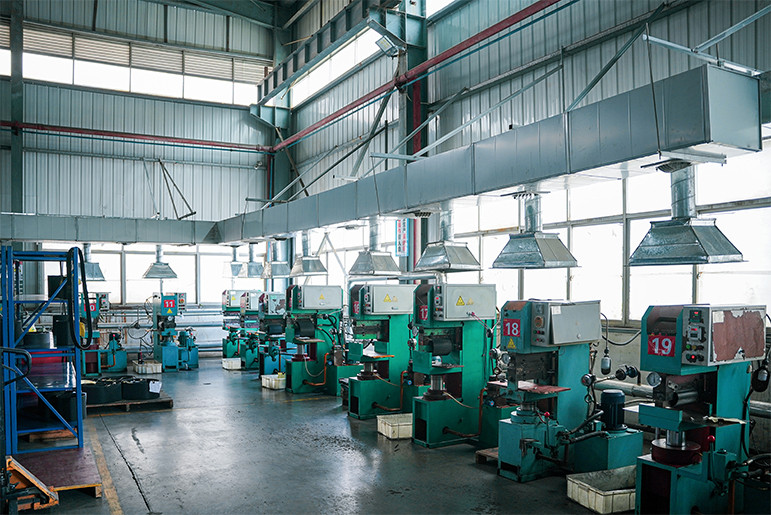
The production of highly durable, industrial-grade belts requires massive amounts of intensive thermal and kinetic energy. Specifically, the mechanical mixing, shaping, and chemical vulcanization stages are traditionally the most power-hungry, resource-intensive processes within any heavy rubber manufacturing facility. To directly and aggressively address this immense energy consumption, Sables has executed significant, multi-million-dollar mechanical and electrical upgrades across all of our CR, EPDM, and HNBR production lines.
We have successfully implemented highly advanced, fully automated digital temperature control systems alongside state-of-the-art Variable Frequency Drives (VFDs) on our massive heavy mixing mills, extrusion lines, and vulcanizing curing presses. Traditional electric motors in rubber factories run at a constant, maximum speed, regardless of the actual load required, leading to devastating energy waste. The newly installed VFDs intelligently and instantaneously modulate the electrical power drawn by these massive industrial motors, continuously analyzing the mechanical resistance and ensuring they only consume the exact, precise amount of electricity required at any given millisecond.
Furthermore, our upgraded vulcanization presses now feature advanced thermal jacketing and heat recovery systems, preventing critical thermal energy from escaping into the factory atmosphere and redirecting it back into the curing process. This profound technological leap dramatically cuts our overall kilowatt-hour (kWh) electricity consumption during the most energy-intensive manufacturing stages. For our dedicated B2B distribution partners, this internal energy optimization goes far beyond mere ecological goodwill or corporate public relations. It effectively and permanently buffers our baseline production costs against highly volatile, unpredictable global energy markets. By drastically lowering our energy overhead, we are able to maintain highly stable, predictable, and fiercely competitive wholesale pricing for our elite synchronous and multi-ribbed belts, passing the economic benefits of sustainability directly down the supply chain to you.
IV. Smart Recycling of Industrial Rubber Scrap
In any large-scale, continuous rubber molding and extrusion facility, the generation of some production sub-products is mechanically unavoidable. This includes materials such as edge trimmings from the slitting process, mold flashings from the curing presses, and transition compounds. However, how a factory chooses to handle, process, and respect this excess material ultimately defines its true commitment to the environment. Sables has aggressively pioneered strict, stringent internal recycling protocols specifically targeted at recovering CR rubber trimmings and un-cured chemical flashings.
Instead of allowing this incredibly valuable, high-performance synthetic material to be carelessly discarded, incinerated, or left to permanently occupy space in commercial landfills, we have designed and integrated a highly efficient, smart circular economic system directly into our factory floor. Production sub-products are meticulously collected at designated stations, strictly categorized by their exact chemical formulation and curing status, and carefully transported to our internal processing facility.
Once sorted, these clean, uncontaminated materials are mechanically shredded, properly masticated, and intelligently repurposed. While they are not used in our primary high-torque synchronous belts to ensure uncompromising structural integrity, they are perfectly blended and utilized for secondary, non-critical industrial applications and localized factory infrastructure components where extreme tensile strength is not the primary engineering requirement. This rigorous, closed-loop approach completely prevents environmental soil degradation and water impact caused by industrial runoff. It successfully maximizes the economic and operational utility of every single batch of raw material we procure, vividly showcasing our absolute dedication to total resource efficiency and zero-waste manufacturing philosophies.
V. Powering Global Industries Sustainably
Modern B2B buyers, international distributors, and global OEM machinery builders must continuously navigate incredibly complex, shifting international regulatory landscapes. When importing industrial mechanical components across borders, ensuring absolute chemical safety, non-toxicity, and strict environmental compliance is no longer optional; it is a paramount legal requirement. Sables proudly and unconditionally guarantees that our entire sophisticated portfolio of CR, EPDM, and HNBR synchronous belts and multi-ribbed belts strictly meets and often exceeds rigorous international safety standards. This includes full compliance with the European Union's RoHS (Restriction of Hazardous Substances) directive and the highly comprehensive REACH (Registration, Evaluation, Authorisation and Restriction of Chemicals) regulations.
By exclusively utilizing safe, heavily vetted raw materials and carefully monitored, closed-system chemical processing, we ensure minimal toxic emissions during manufacturing and absolute material safety for the end-user. These reliably produced, eco-conscious belts directly empower some of the world's most critical, demanding industrial sectors to operate smoothly and sustainably.
In the highly complex wire and cable manufacturing industry, our premium synchronous belts deliver the flawless mechanical timing, absolute high-torque rotational accuracy, and precision transmission required to maintain exact extrusion line speeds and ensure perfect cable uniformity. Simultaneously, in the demanding, high-speed automated textile machinery sector, our precision-engineered multi-ribbed belts provide incredible mechanical flexibility, vibration dampening, and extreme operational endurance. They easily withstand continuous, rapid directional changes and high RPMs without generating excessive frictional heat, shedding toxic ambient particulates, or suffering from premature elongation. We do not just build power transmission belts; we engineer reliable, compliant solutions that sustain the heavy machines they drive while fiercely protecting the delicate environments in which they operate.
VI. Conclusion: A Commitment to the Future
The global industrial shift towards green, sustainable manufacturing is no longer a distant future trend or a niche marketing angle; it is an immediate, pressing operational necessity for survival in the modern B2B marketplace. Through the decisive, highly capitalized implementation of our comprehensive energy-saving methodologies and smart waste recycling programs, Jiangxi Kangqi Industrial Co., Ltd. is actively setting a new, elevated standard for responsible, forward-thinking power transmission manufacturing.
We openly invite forward-thinking distributors, highly driven wholesalers, and international B2B procurement partners to align their business strategies with the Sables brand. By seamlessly integrating our sustainable, highly optimized lean manufacturing processes directly with your regional distribution network, we offer substantially more than just boxes of mechanical components. We deliver highly predictable, long-term commercial value, stabilized and protected supply chain economics, and a steadfast, deeply eco-conscious partnership. Together, we are perfectly positioned to drive your business profitability—and the broader global industrial sector—reliably and powerfully into a much cleaner, more efficient, and highly sustainable future.