Pain Points Analysis and High-Performance Solution
- Share
- Issue Time
- Feb 4,2026
Summary
Behind every precisely formed cardboard box on a modern packaging line lies the silent, crucial work of a timing belt.
On a morning production shift, a seamless box stitching machine operates efficiently at 60 boxes per minute. Suddenly, a sharp screeching sound disrupts the rhythm—timing belt slippage causes misalignment, resulting in three consecutive wasted boxes.
01 Technological Evolution: The Critical Role of Timing Belts
Seamless box stitching machines are core equipment in modern packaging, responsible for rapidly and accurately transforming flat cardboard into sturdy boxes. Every step—feeding, creasing, folding, and stitching—relies on a precise transmission system.
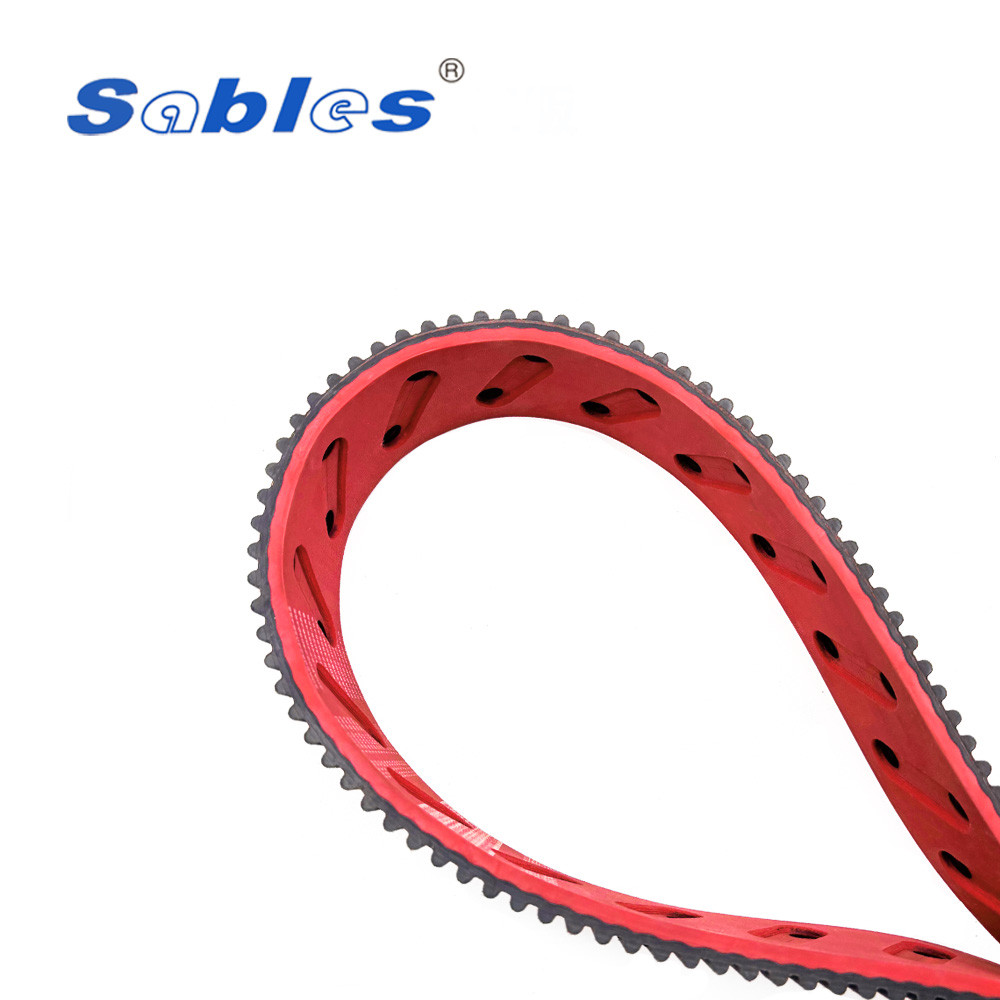
Here, the timing belt acts as the precision conductor. Unlike traditional chains or gears, its tooth engagement ensures zero-slip synchronous motion, guaranteeing strict coordination between moving parts. In high-speed operation, this synchronization directly determines forming accuracy and overall efficiency.
Common timing belt types include rubber, polyurethane, and newer composite material belts, each with distinct characteristics in wear resistance, oil resistance, tensile strength, and temperature tolerance, suiting different operational demands.
02 Pain Points: Five Major Challenges in Application
Even high-quality timing belts face significant challenges in the demanding environment of box stitching machines. Here are the five most reported pain points:
Premature Wear & Reduced Lifespan is the most common issue. Cardboard dust and debris act as abrasives on belt teeth. Maintenance logs from a major packager show that without effective dust removal, average belt life can drop to 60% of normal.
Accuracy Drift directly impacts quality. Minor slippage or tooth wear immediately reduces folding precision, leading to inconsistent box dimensions or weak structures. This drift is often gradual, frequently going unnoticed until a batch of defective boxes is produced.
Insufficient Environmental Resistance is a hidden bottleneck. Common workshop factors—temperature fluctuations, humidity, and occasional lubricant exposure—degrade belt materials. In cold-chain packaging, low temperatures can harden rubber, reducing transmission efficiency.
Complex Installation & Maintenance increases operational costs. Proper tensioning requires specialized tools and precision; incorrect tension shortens belt life and increases motor load. Many small to mid-sized operations lack dedicated technicians, often running belts in suboptimal conditions.
The Cost-Performance Balancing Act challenges decision-makers. High-end imported belts offer superior performance at a premium, while cheaper alternatives compromise longevity and stability. Balancing transmission system costs without sacrificing productivity is an ongoing struggle.
03 Solutions: Targeted Strategies & Technological Innovation
The industry is addressing these pain points through innovation in materials, design, and maintenance.
Material Science Advances are pushing performance boundaries. For example, embedding aramid fibers as tensile members in polyurethane can increase belt strength by over 40% while maintaining flexibility. Tooth surfaces enhanced with nano-ceramic particles have shown nearly doubled wear resistance, translating directly into longer replacement cycles and more stable operation.
Structural Design Optimizations bring significant improvements. Asymmetric tooth profiles better distribute load and reduce stress concentration at the tooth root. Seamless, one-piece molding eliminates weak points found at traditional joints. New "smart" belts with embedded sensors can monitor tension and wear in real time.
Maintenance Strategy Upgrades are key to reducing unplanned downtime. Implementing a preventive maintenance schedule—regular tension checks, wear inspections, and system cleaning—can reduce timing belt failures by up to 70%. Leading packaging firms are adopting IoT-based remote monitoring to track transmission system health and predict maintenance needs.
Professional Training & Standardized Procedures hold great value. Installation training and maintenance guidance from equipment manufacturers help users achieve correct belt tension, preventing early failure from improper setup. Standardized procedures ensure consistent, effective maintenance, extending the overall system lifespan.
04 Future Outlook: Smart Transmission & Sustainable Development
The evolution of timing belts for stitching machines is moving toward greater intelligence, sustainability, and efficiency.
Integrated Smart Sensor Technology will transform belts from passive components into active monitoring units. Imagine belts providing real-time feedback on tension, temperature, and wear, issuing alerts before potential failures occur and revolutionizing maintenance models.
Research into self-healing materials offers fascinating possibilities for longevity. These materials could automatically repair minor damage, significantly extending service life. While still largely in R&D, their commercial potential is promising.
Eco-friendly & Recyclable Materials development aligns with industry sustainability trends. Next-generation bio-based polyurethane and fully recyclable rubber compounds are gradually replacing traditional petroleum-based products, maintaining performance while reducing environmental impact.
For equipment users, adopting a Total Lifecycle Cost assessment model will enable more scientific decision-making. This model evaluates not just the purchase price, but also installation, maintenance, downtime costs, and productivity impacts, helping users optimize their transmission system investments.
Late in the shift, a newly installed high-performance timing belt has been running for 18 hours straight. The production counter steadily climbs past 65,000 boxes with zero alignment errors.
The floor manager notes the new belt operates 15 decibels quieter, and the box quality pass rate holds steady at an excellent 99.97%.
He plans to upgrade the belts on two other production lines next week and has scheduled training for his maintenance team on the new tension calibration methods. In today's competitive packaging industry, every gain in transmission precision translates directly into stronger market competitiveness.