How to Choose the Right Timing Belt for Industrial Applications
- Share
- publisher
- Bruce
- Issue Time
- Jan 6,2026
Summary
Choosing a timing belt is not only about pitch and length.
In industrial applications, incorrect selection often leads to early wear, cracking, or unstable performance.
This guide explains how to make practical, realistic belt selection decisions.
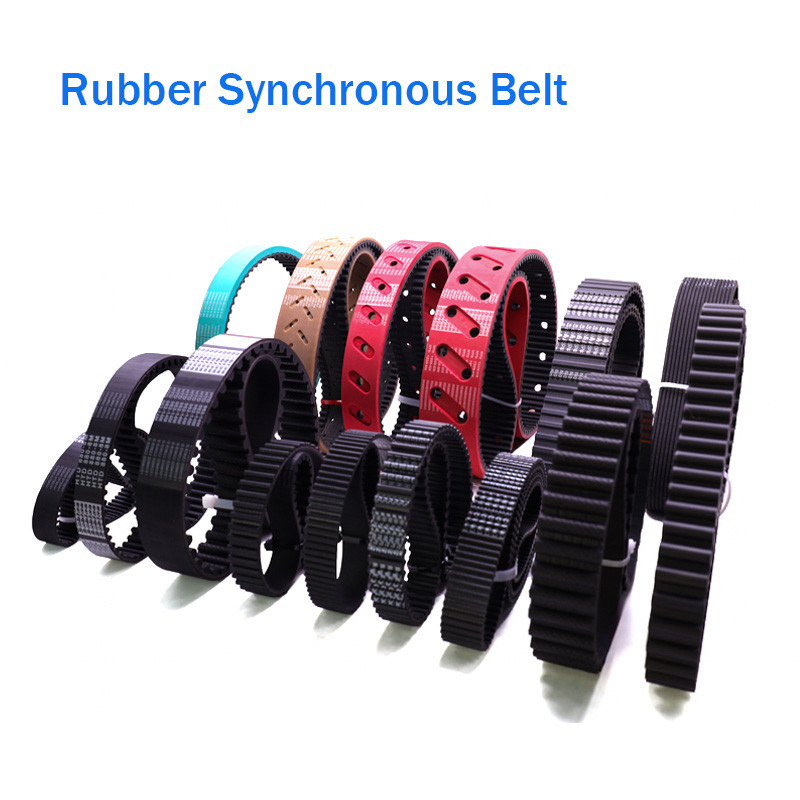
1. Start With the Application, Not the Belt
Key questions to ask:
·Is the load steady or shock-based?
·Is the operation continuous or start-stop?
·Is the belt used for power transmission or positioning only?
Different applications stress the belt in very different ways.
2. Pitch Selection: 8M vs 14M
8M
·Higher flexibility
·Suitable for medium loads and compact designs
14M
·Higher load capacity
·Better for heavy-duty and high-torque transmission
Choosing a larger pitch than needed increases cost.
Choosing a smaller pitch than required reduces belt life.
3. Belt Width Is Not Just “Wider Is Better”
Increasing width:
·Reduces tooth load
·Increases stiffness
But excessive width can:
·Increase alignment sensitivity
·Add unnecessary cost
Practical rule:
Increase width only when load or service life requires it.
4. Top Cover / Coating Matters More Than Many Think
For conveying and pulling applications:
·Soft coating
·High friction
·Faster wear
·Hard coating
·Better wear resistance
·Lower friction
Wrong coating selection often causes surface failure, even when the belt body is correct.
5. Installation and System Design Still Matter
Even a correctly selected belt can fail early if:
·Installation is forced
·Alignment is poor
·Tension is incorrect
·Belt selection and system setup must work together.
Final Takeaway
Reliable timing belt performance comes from:
·Correct pitch and width
·Proper material and coating
·Reasonable pulley design
·Correct installation
A timing belt should be treated as part of the system, not a consumable to be replaced blindly.